
Spelling Bee Unlimited is a free browser-based word puzzle where you generate a new
honeycomb puzzle whenever you want instead of waiting for a daily reset. Each puzzle gives you seven
letters, one required center letter, and at least one pangram. There's no account, no subscription,
and no limit on how many puzzles you play in a session.
If you've ever finished the NYT Spelling Bee in ten minutes and wanted another puzzle immediately,
this is the mode built for that. Play one puzzle or fifty. Save your progress across every game you
open, share a specific puzzle with a friend so you're both solving the exact same letters, and pick
up any saved game exactly where you left it, on a phone, a school Chromebook, or a laptop, without
installing anything.
Master Spelling Bee Unlimited in four easy steps. Learn how to make words, find pangrams, earn more points, and reach Genius rank. This simple guide is perfect for beginners and daily word-game players.
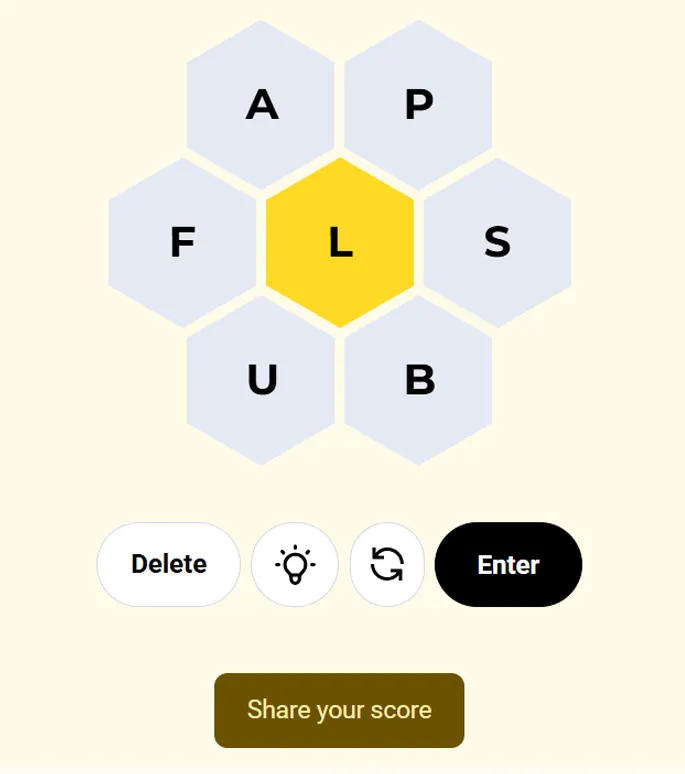
Open Unlimited Mode and a fresh honeycomb is ready immediately, no waiting for midnight, no daily reset. Seven letters, one center letter shown in a different color, and at least one pangram hidden somewhere in the set. Every word you submit needs four or more letters and must include the center letter at least once.
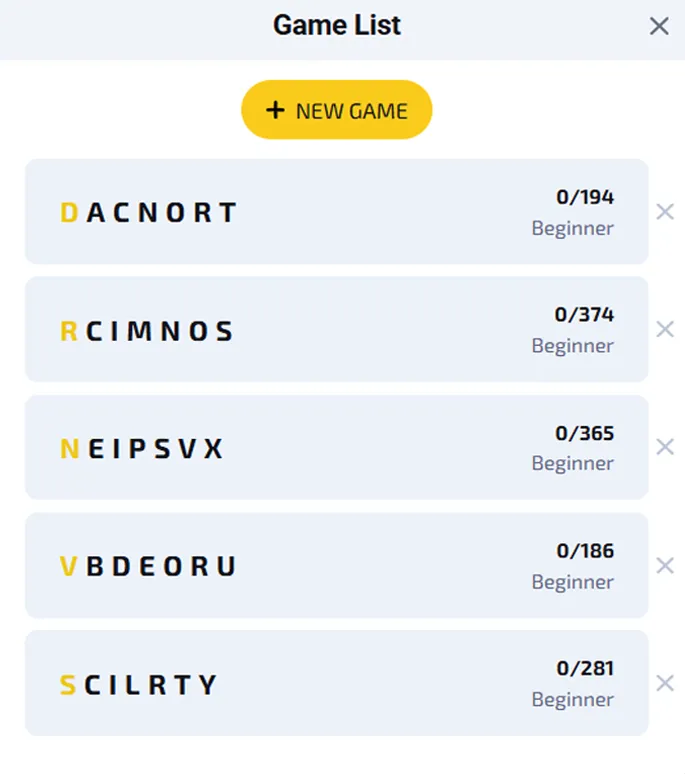
Start a second puzzle while your first is still open, nothing is lost. Up to 50 games can stay active at once, each one remembering its own word list, score, and rank exactly as you left it. Open the game list to jump between them, or delete a finished one to free a slot for something new.
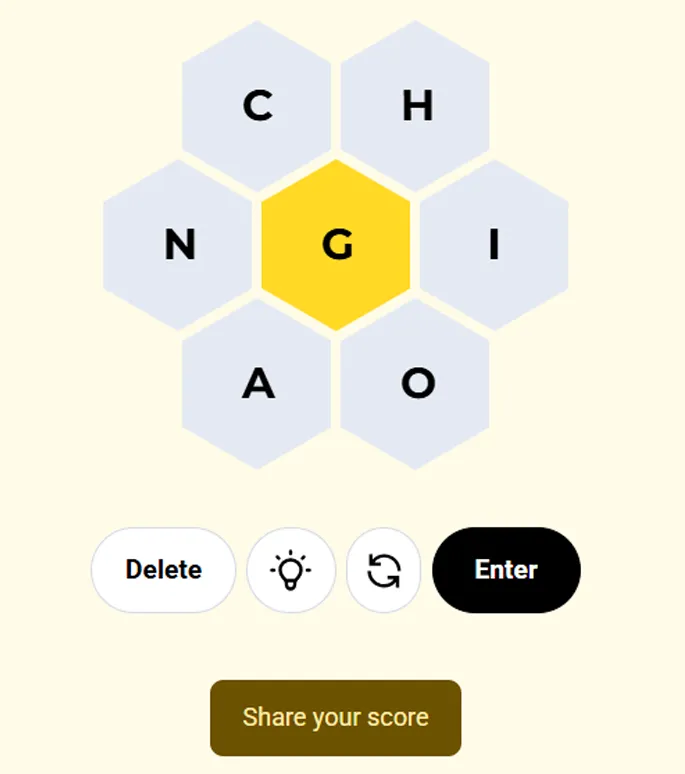
Every puzzle you generate has its own link. Send that exact link to a friend, a classroom, or a study group, and everyone solves the same seven letters, not just a similar one. That's a genuine gap in the standard daily format, which only ever gives you one shared puzzle per day.
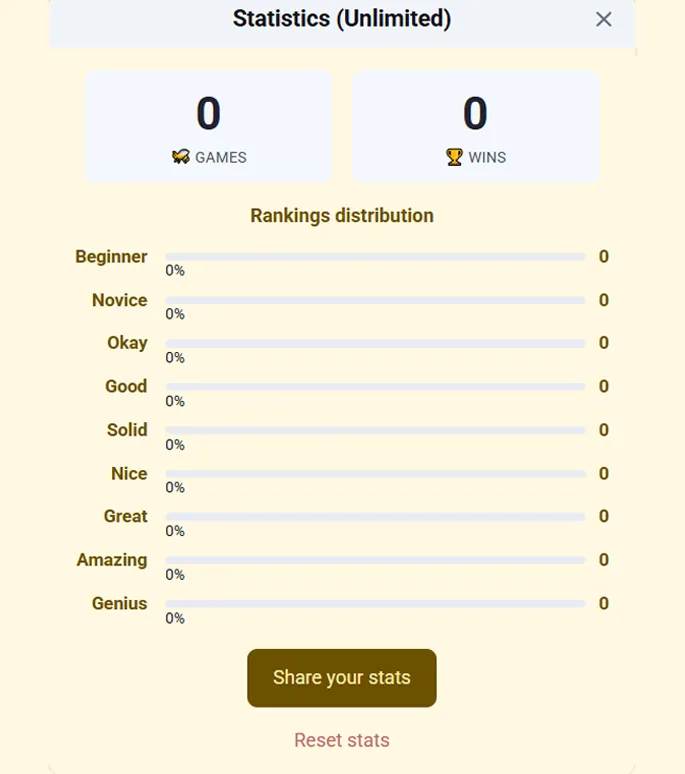
Your stats track Genius rate and rank distribution across every unlimited game you've completed, not just today's. Over enough puzzles, this turns into a genuinely useful signal: which letter combinations you consistently miss the pangram on, and which suffix patterns you already spot fast.
It's the same core game as the daily Spelling Bee, seven
letters in a honeycomb, one mandatory center letter, a minimum four-letter word length, and at
least one pangram per puzzle worth a bonus, with the 24-hour wait removed. Instead of one puzzle
a day, you generate a new one whenever you're ready for it.
That single change matters more than it sounds. The daily format is built around a shared,
synchronized puzzle: everyone gets the same seven letters, everyone compares the same score. It's
great for a habit. It's not built for someone who wants to practice for thirty minutes, or a
teacher who needs three different puzzles running in one class period, or a competitive speller
who wants volume, not a single data point per day.
Players search for this mode under several names, spelling bee unlimited, spell bee unlimited,
spelling bee game unlimited, unlimited spelling bee game, and all of them land on the same thing:
unrestricted, honeycomb-format word puzzles with no daily cap. New to the base format entirely?
Start with our how to play
Spelling Bee guide first.
Yes. There's no subscription, no premium tier, no locked feature, and no account requirement. Puzzle generation, the 50-game save system, puzzle sharing, and full rank tracking are all available without payment, from the first puzzle you open.
That's worth stating plainly, because it's the exact objection this audience carries in. Several "unlimited" word-game pages online cap you at a fixed number of puzzles per day and push a download or an upgrade once you hit it, which isn't really unlimited, just a bigger daily allowance. If a page advertises "unlimited" and then shows you a slot counter running out, that's the tell. This mode has no such counter: generate puzzle 1 or puzzle 500 in the same session, at no cost either way.
The official New York Times Spelling Bee is the version most people know, and it has one structural limitation that drives most of this search traffic:
| What you get | Spelling Bee Unlimited | NYT Spelling Bee |
|---|---|---|
| Puzzles per day | Unlimited, on demand | One |
| Cost | Free, no account | Free daily puzzle; full archive and some features are subscription-gated |
| Concurrent saved games | Up to 50 | One active puzzle at a time |
| Share a specific puzzle | Yes, unique link per game | Not designed for this, everyone shares the single daily puzzle |
Note: NYT's exact current pricing and subscription terms change over time and aren't something we track here, check nytimes.com directly for their live pricing if that's relevant to your decision.
Search interest for "spelling bee games free online" is broader than just this one format, plenty of people typing that phrase are comparing honeycomb-style puzzles against Wordle, Connections, and similar daily word games before picking one to stick with. Here's the honest distinction:
| Word length | Points |
|---|---|
| 4 letters | 1 point |
| 5 letters | 5 points |
| 6 letters | 6 points |
| 7 letters | 7 points |
| 8+ letters | 1 point per letter |
| Pangram (any qualifying length) | Word's normal score + 7 bonus points |
| Rank | What it signals |
|---|---|
| Beginner | First points on the board |
| Novice | Early pattern recognition kicking in |
| Okay | Consistent early progress |
| Good | Comfortably clearing common words |
| Solid | Broadening vocabulary reach |
| Nice | Above-average word count for the puzzle |
| Great | Strong command of the format |
| Amazing | Near-complete word coverage |
| Genius | Roughly 70% of the maximum possible score, most players' target milestone |
| Queen Bee | Every valid word found |
Genius is the rank most players actually aim for, and it's reachable in most puzzles by finding the pangram early and then systematically working through common suffix families rather than guessing at random. See the practice section below for exactly how that looks in a real puzzle.
Every "why wasn't my word accepted" frustration traces back to one thing: the puzzle checks your word against a specific dictionary, and that dictionary deliberately excludes proper nouns, hyphenated words, most abbreviations, and obscure technical terms that would make the puzzle unsolvable. This isn't a bug, it's the same filtering logic every version of this game format uses, including the original. If a word you know is correct gets rejected, it's very likely filtered by design, not missing by accident. See our full Spelling Bee rules guide for the complete word-validation logic.
Generic advice like "expand your vocabulary" isn't actionable mid-puzzle. Here's what actually speeds up word-finding in a live game:
"Unblocked" here means exactly what it sounds like: the game runs as a standard webpage in any browser, with nothing to install and no admin permissions required. That's why it loads on school Chromebooks and locked-down office laptops where app stores and downloads are typically restricted, there's no app to block in the first place.
It also works the same way across devices: Windows, Mac, iOS, Android, or any browser with no platform-specific version to chase down. And it's built to be usable without a mouse, every letter can be entered from a keyboard, and the honeycomb uses a high-contrast color scheme rather than color alone to mark the center letter, which matters for colorblind players specifically.
The 50-game save system is the feature that separates this from a simple "one random puzzle" tool:
For a classroom, this means a teacher can run three different puzzles across three sections without anything overwriting anything else. For a competitive speller, it means running a deliberate practice block, ten puzzles back to back, without losing any of the earlier ones.
The prefix, suffix, and root patterns this format reinforces overlap directly with vocabulary sections on standardized tests. Unlimited play just means more distinct patterns per session than one daily puzzle allows. See our Spelling Bee words by grade list for age-appropriate difficulty targeting.
Share one puzzle link, project it, and everyone in the room solves the identical letters, a genuinely shared classroom challenge rather than everyone getting a different random set.
The most common complaint about the daily format is simply that it ends. Unlimited mode removes that ceiling entirely, finish one puzzle, start the next immediately, for as long as the session lasts.
Volume matters for competition prep specifically because it trains recognition under repetition, not just recall of a fixed list. For a structured approach, see our spelling bee practice routine guide.
| If you want... | Play this |
|---|---|
| A quick daily habit shared with friends | Daily mode |
| More than one puzzle in a sitting | Unlimited mode |
| To compare a score against everyone else today | Daily mode |
| To send a friend the exact puzzle you're solving | Unlimited mode (share the specific link) |
| Focused practice on a specific skill (pangrams, suffixes) | Unlimited mode |
Both are free, with no account and no paywall on either mode.
The broader honeycomb/word-generation format has grown alongside daily-puzzle games generally over the past few years, and the clearest trend among free versions of this format is a move toward exactly the features covered above: no forced accounts, transparent word-list rules, and genuine (not artificially capped) unlimited play. Expect more competitors to add multi-game save systems and shareable links, since both are now baseline expectations rather than differentiators, which is part of why the transparency and practice-methodology content above matters more than the mechanics alone going forward.
Open a new puzzle, find your first word, and chase the pangram. Come back to any of your saved games whenever you want, nothing resets, nothing locks, and nothing costs anything, this session or the next.
A free browser-based word puzzle mode that lets you generate a new honeycomb puzzle whenever you want instead of waiting for a daily reset. Seven letters, one required center letter, at least one pangram per puzzle, no account needed.
Yes, spell bee unlimited, spelling bee game unlimited, and unlimited spelling bee game are all names players use for the identical mode.
Yes. No subscription, no premium tier, no in-app purchase, and no locked feature. Every puzzle, every saved game slot, and every shared link is free from the first use.
Yes. It runs as a standard webpage with nothing to install, so it typically loads fine on networks that block app downloads or app stores specifically.
The NYT version gives one puzzle per day and gates some features behind a subscription. This mode has no daily cap, no account requirement, and lets you save up to 50 puzzles at once.
Up to 50. Each one saves automatically and resumes exactly where you left it. Delete a finished game any time to free a slot.
Yes. Every puzzle has its own link, so anyone who opens it plays the exact same seven letters you're solving, useful for comparing word lists directly.
Genius is reached at roughly 70% of a puzzle's maximum possible score and is the milestone most players target. Queen Bee, the highest rank, requires every valid word.
The puzzle checks words against a specific dictionary that excludes proper nouns, hyphenated words, and most obscure or offensive terms by design, this keeps every puzzle solvable, but it does mean some real words you know may be filtered out on purpose.
Yes, it works through active recall (producing a word from memory, not just recognizing one) across a much wider range of letter combinations than a single daily puzzle can offer.
Wordle is deduction-based with one hidden answer per day. This format is generative, you find as many valid words as exist in a fixed letter set, with no single "correct answer" ceiling, which is what makes unlimited replay meaningful here specifically.